(a) ionic or electrovalent
F is metal and H is non metal.
b) (i) J atomic radius decrease a long a period from left to right nuclear change attraction
increase positive nuclear change increase due to increase in the number of protons.
(ii) F has a smaller atomic radius than N level down the grown.
c) W is group 5 period 3
d) Transition metals.
e) J has 3 valence electrons which and delocalized whole Q has only 2 electron : hence J
has high electrical conductivity due to high number of delocalized electron.
f) The reactions have both metallic and non metal properties
g) H is more reactive than M non metal reactivity increase up the group due to decrease in electro negativity down the group.
maurice.mutuku answered the question on October 15, 2019 at 10:19
-
Sodium metal tarnishes when exposed to the air where a white powder is formed on its
surface. A small piece of this sodium metal was dropped...
(Solved)
Sodium metal tarnishes when exposed to the air where a white powder is formed on its
surface. A small piece of this sodium metal was dropped into 25g of ethanol and 1200cm3
of hydrogen gas was evolved at r.t.p. The unreacted ethanol was evaporated and a white
solid remained. (Na=23, molar gas volume at r.t.p = 24dm3, C=12, O =16, H=1)
(a) Write a chemical equation for the reaction between ethanol and sodium metal
(b) Determine the mass of sodium that reacted with ethanol
(c) What mass of ethanol evaporated?
(d) The ethanol was evaporated at 80oC, while the white solid remained unaffected at this
temperature. What is the difference in structure of ethanol and the white solid?
(II) (a) Name an inorganic liquid which liberates hydrogen gas with sodium metal
(b) What two differences would you observe if similar pieces of sodium were dropped
separately into small beakers containing equal amount of ethanol and the liquid
named in (II)(a) above respectively
Date posted:
October 15, 2019
.
Answers (1)
-
Explain the following observations:-
(i) NaCl allows electric current to pass through them in molten state
(ii) Graphite is a non-metal yet it is a conductor of...
(Solved)
Explain the following observations:-
(i) NaCl allows electric current to pass through them in molten state
(ii) Graphite is a non-metal yet it is a conductor of electricity
Date posted:
October 15, 2019
.
Answers (1)
-
Explain how electrical conductivity can be used to distinguish between magnesium oxide and silicon (IV) oxide
(Solved)
Explain how electrical conductivity can be used to distinguish between magnesium oxide and silicon (IV) oxide
Date posted:
October 15, 2019
.
Answers (1)
-
Explain why luminous flame is capable of giving out light and soot
(Solved)
Explain why luminous flame is capable of giving out light and soot
Date posted:
October 15, 2019
.
Answers (1)
-
Water has a boiling point of 100oC while hydrogen chloride has a boiling point of -115oC. Explain
(Solved)
Water has a boiling point of 100oC while hydrogen chloride has a boiling point of -115oC. Explain
Date posted:
October 15, 2019
.
Answers (1)
-
Between aluminium and copper which one is a better conductor? Explain
(Solved)
Between aluminium and copper which one is a better conductor? Explain
Date posted:
October 15, 2019
.
Answers (1)
-
Using dots and crosses to represent electrons, draw the structures of the following:
(a) Phosphorous chloride (PCl3)
(b) Hydroxonium ion (H3O+)
(Solved)
Using dots and crosses to represent electrons, draw the structures of the following:
(a) Phosphorous chloride (PCl3)
(b) Hydroxonium ion (H3O+)
Date posted:
October 15, 2019
.
Answers (1)
-
Draw a diagram to show bonding in an ammonium ion. (N = 7, H = 1)
(Solved)
Draw a diagram to show bonding in an ammonium ion. (N = 7, H = 1)
Date posted:
October 15, 2019
.
Answers (1)
-
Study the information in the table below and answer the questions that follow.
(The letters do not represent the actual symbols of the elements)
(Solved)
Study the information in the table below and answer the questions that follow.
(The letters do not represent the actual symbols of the elements)

(a) What is the general name given to the group in which elements P, Q and R belong?
(b) Explain why P has the highest ionization energy
(c) Write a balanced chemical equation for the reaction between element Q and water
Date posted:
October 15, 2019
.
Answers (1)
-
The information in the table below relates to elements in the same group of the periodic table.
Study it and answer the question that follows.
(Solved)
The information in the table below relates to elements in the same group of the periodic table.
Study it and answer the question that follows.
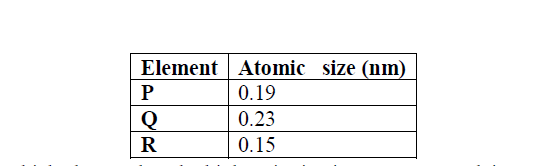
Which element has the highest ionization energy? Explain
Date posted:
October 15, 2019
.
Answers (1)
-
The table below shows elements A, B, C, E, F, and G. Elements in group X have a valency of 2 while elements in group...
(Solved)
The table below shows elements A, B, C, E, F, and G. Elements in group X have a valency of 2 while elements in group Y have a valency of 1. Use the table to answer the questions that follow:-

(i) Atomic radius increases from A to C and from E to G. Explain
(ii) Explain the difference in the atomic and ionic radii of group X elements
(iii) Elements C and G belong to the same period. Explain why the atomic radius of C is
greater than that of G
(iv) Give the formula of the compound formed when B and F react
(v) What type of bonding is formed in the compound above? Explain
(vi) Starting with the least reactive, arrange the elements in group Y in the order of reactivity.
Explain:
Date posted:
October 15, 2019
.
Answers (1)
-
Study the information in the table below and answer the questions that follow. The letters do not represent the actual symbols of the elements.
(Solved)
Study the information in the table below and answer the questions that follow. The letters do not represent the actual symbols of the elements.

(a) What is the general name given to the group in which the elements X, Y and Z belong?
(b) Select two elements which are coloured gases
(c) Explain why Z has the highest boiling point
(d) Write an equation for the reaction of element Z with iron metal
(e) Element Y was dissolved in water and a piece of blue litmus paper was put into the resulting solution. State and explain the observation that was made on the litmus paper
Date posted:
October 15, 2019
.
Answers (1)
-
State the reason for using Argon in electric light bulbs
(Solved)
State the reason for using Argon in electric light bulbs
Date posted:
October 15, 2019
.
Answers (1)
-
Study the information in the table below and answer the questions that follow:
(Solved)
Study the information in the table below and answer the questions that follow:

(a) Would these form part of a metallic or a non-metallic group? Explain
(b) Suggest an element in the table above likely to be the most reactive. Explain
Date posted:
October 15, 2019
.
Answers (1)
-
Ethanol is a liquid at room temperature but does not conduct electricity. Explain.
(Solved)
Ethanol is a liquid at room temperature but does not conduct electricity. Explain.
Date posted:
October 15, 2019
.
Answers (1)
-
Compare with a reason the atomic radius of Sodium to that of Aluminum.
(Solved)
Compare with a reason the atomic radius of Sodium to that of Aluminum.
Date posted:
October 15, 2019
.
Answers (1)
-
Identify the particles that facilitate the electric conductivity of the following substances
(i) Sodium metal
(ii) Sodium Chloride solution
(iii) Molten Lead Bromide
(Solved)
Identify the particles that facilitate the electric conductivity of the following substances
(i) Sodium metal
(ii) Sodium Chloride solution
(iii) Molten Lead Bromide
Date posted:
October 15, 2019
.
Answers (1)
-
An element W has an atomic number 13.
a) Write the electronic configuration of the most stable ion of W
b) Write the formula of the oxide...
(Solved)
An element W has an atomic number 13.
a) Write the electronic configuration of the most stable ion of W
b) Write the formula of the oxide of the element W
Date posted:
October 15, 2019
.
Answers (1)
-
The grid below is part of the periodic table. The elements are not represented by their actual symbols. Use the information to answer the questions...
(Solved)
The grid below is part of the periodic table. The elements are not represented by their actual symbols. Use the information to answer the questions that follow.
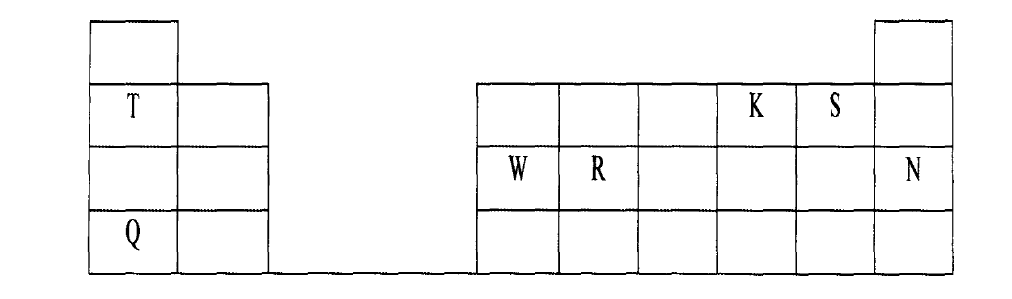
a) (i) Which is the most reactive
(I) Non — metal?
Explain
(II) Metal?
Explain
(ii) Name the family to which elements T and Q belongs.
(iii) Write the formula of the compound formed when W reacts with S.
(iv) Name the type of bond and structure formed when elements R and K react.
(v) Explain why element N doesn’t form compounds with other elements.
(vi) Compare the atomic radii of T and Q. Explain.
Date posted:
October 15, 2019
.
Answers (1)
-
The grid below represents part of the periodic table. Study it and answer the questions that follow:
(Solved)
The grid below represents part of the periodic table. Study it and answer the questions that follow:
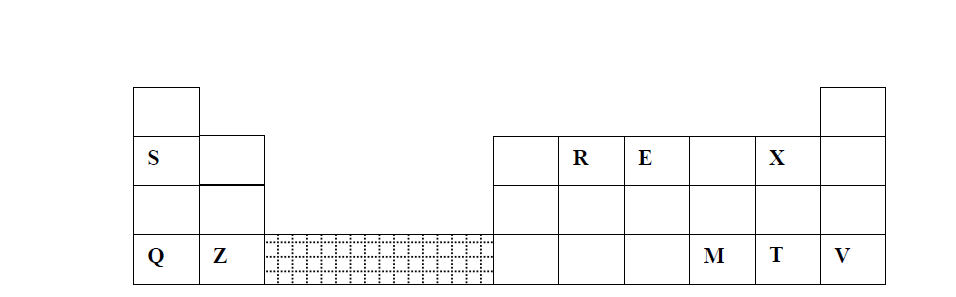
(a) (i) Identify the element that gains electrons most readily
(ii) Which of the metal is most reactive? Explain
(iii) What name is given to the family of elements to which elements X and T belong?
(iv) Explain why:-
(I) Ionic radius of Q is larger than that of M
(II) Atomic radius of Q is greater than that of S
(v) Which of the element in the table does not have the ability to form an ionic or covalent
bond? Explain
(vi) Give the formula of the compound formed between R and Z
Date posted:
October 15, 2019
.
Answers (1)